
Why are there barely any Black Writers on Substack’s “Bestsellers” lists?
I realize most of Substack’s “Bestsellers” are White, but I still aspire to transcend the obvious void of diversity and reach a top spot on that list as a Black Revolutionary Writer.


Yesterday I was scrolling through the “Bestsellers” lists on Substack and I realized that most of them were white people.
This is not to say that those individuals aren’t great writers, or worthy of paid subscriptions, but the lack of diversity surrounding who’s writing gets supported with “paid subscriptions” and who doesn’t is telling of the subliminal infrastructure of racism even within digital spaces and online platforms like Substack.
There is an abundance of GREAT Black Writers on Substack, many of whom get tons of verbal support in the comment section, but that love doesn’t always translate to reciprocated value in the form of monetary compensation the way that other non-black writers seem to attract.
Now before I get going, let me address a potential elephant in the room.
I consider myself a Black Revolutionary Writer, I’ve recently just reached $1,000 of annual revenue from paid subscriptions, and although I am nowhere near the qualifications to be ranked I am rapidly amassing a decent following on this platform.
I know someone out there will use that information to say, “How can you say the algorithm is racially biased, and the Bestseller charts are rigged in the favor of white writers, when you seem to be doing so well?”
My response to that criticism is simple, I am succeeding in spite of the rigged system, not because the rigged system doesn’t exist.
The same way Jackie Robinson succeeded in spite of the rigid, segregated American culture of racism and rigged favoritism of white baseball players.
The same way Jack Johnson became a Heavyweight Boxing Champion in spite of the radical racism in the Jim Crow Era and rigged favoritism of white boxers.
My individual trajectory towards success as a Black Writer on Substack does not mean that there is not a racial bias in the algorithm, or that the rigged favoritism of white writers does not exist.
It simply means I am winning in spite of the infrastructure of the racism embedded into the algorithm and foundational culture of the platform. I win in spite of the racist trolls harassing me. I win in spite of how discouraging it is to see a white majority in the “Bestsellers” categories. I win in spite of the algorithm not showing my work on the feeds to the same degree as my non-black counterparts because Black Revolutionary Writing is perceived as artless notations, rudimentary compositions, and simple rebellious rhetoric according to traditional literature standards.
Nonetheless, I still have a long way to go, but I am determined to pierce the threshold of the pasty perimeter guarding the “Bestsellers” categories of Substack. As long as I can continue to conjure up the vigorous vigilance and tenacious defiance of the many Black Revolutionary Writers that have come before me, I will not lose.
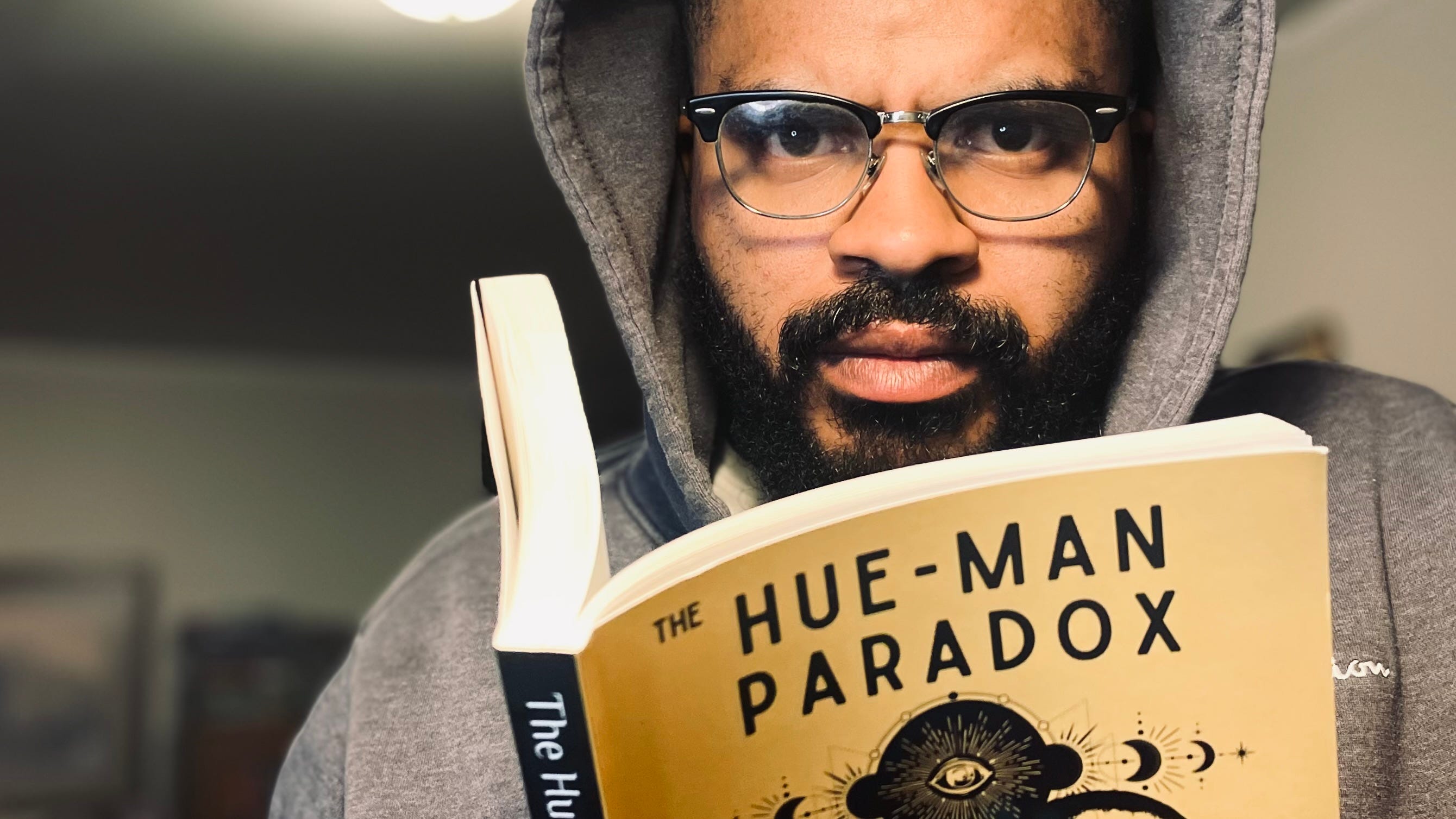
Black Writers matter too, and I must represent and make my voice unavoidable, not just for me, but for my culture, for my fellow Black Writers, and for the multitudes of melanated peoples whose voices have been silenced and censored under the tragic system of white supremacy.
A wise man once said, “If you scared to throw it up, get the FUCK out the club!”
Well the only thing I am scared of is what would happen if the racists that uphold this inhumane system are allowed to dictate the narrative and tell our story instead of us. So it is my duty as a Black Man with testicular fortitude and a literary prowess to hold it down, elevate empowering truths, and deconstruct this cowardly colonial conundrum one word at a time.
So today’s essay is going to explore a few things:
How historically Black Art in general has been ravenously consumed and commodified by colonial capitalist entities, as well as the general public, and exploited for massive profits while Black Artists are often denied fair compensation, ownership, or recognition for our creations.
How the algorithms of social media, including Substack, are embedded with a racial bias that makes it an uphill battle for Black creatives to have our work appear on the feed of the other platform users
How Black writers are not deemed “professional” or “credible” unless we adhere to a specific cultural framework; writing that exposes white supremacy, denounces the greed of capitalism, points out the poisonous patterns of the patriarchy, or inspires revolutionary thoughts and energy that are counterproductive to the campaigns of the empire is considered unsophisticated and irrelevant.
The Exploitation Of Black Art
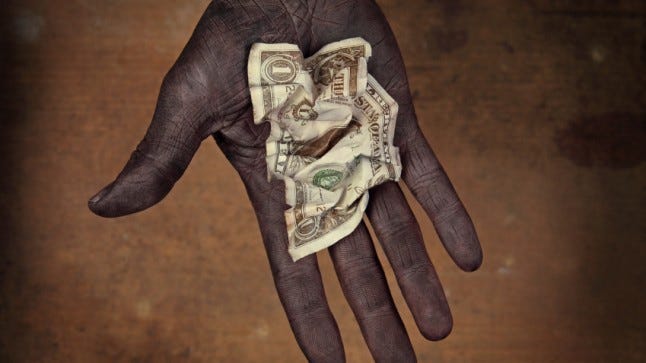
Black art is quick to be consumed, enjoyed, and exploited but the value it brings to the world is hardly reciprocated with fair or adequate compensation.
Major corporations, and the general public, capitalize off of our creativity yet we rarely reap the benefits of our genius. We continuously set the trends, shape the popular culture of society, influence and inspire the styles and nuances within almost every category of people activity, and we manage to accomplish this under the pressure of oppression while maximizing limited resources.
This excerpt from an article titled “The Theft of Black Art” written in 2022 by Tommy Glennon of The Spartan Shield expands on the long-winded phenomena of Black Art being exploited:
“Art crosses boundaries and brings people together. It transcends literal interpretations and acts as a medium to express the thoughts and feelings of the artist. Rather, it’s supposed to express the thoughts and feelings of the artist.
For as long as there has been art, there has been theft. Certain individuals make a living off of taking the art of other people and passing it off as their own. It’s the primary reason copyright law exists today. Still, for Black artists, these laws have done little to quell the industries that thrive on the theft of Black art.
The music industry is no stranger to this practice. Popular rockstar Elvis Presley famously covered Big Mama Thornton’s “Hound Dog” and gave no credit to the less-popular Black artist. In fact, many credit the creation of rock and roll to the Black community as a whole. A similar story exists within jazz music, which was born from Black artists, yet popularized and appropriated by white ones. Even now, pop music is fundamentally influenced by Black artists, who until recently, were given little recognition compared to their white counterparts.
This onslaught of theft, among other institutional conflicts, is one of the reasons Black people still face economic injustice today.”
Everyone loves to consume, enjoy, and exploit the art Black people make, but not everyone loves to support the Black people who make it.
The Racial Bias of the Algorithm
Think of the algorithms that run social media platforms like Facebook, Twitter, YouTube…and even Substack, like a DJ.
The DJ’s job is to make sure everyone at the party is having a good time and being continuously entertained by a desirable seamless flow of music. A good DJ attracts more people to the party, and keeps those people at the party for its entire duration. So in simple terms, a major component to having a successful party is having a good DJ.
So if social media is the party, the algorithm is the DJ.
Social media companies need users to stay on the platform as long as possible because that’s how they generate income, so a major component of user retention, keeping the party going, is a good algorithm that feeds a desirable seamless flow of media.
However algorithms don’t just fall out of the sky or grow out of the ground, they are programs, a set of computation rules and AI driven procedures that need to be created. The problem with the algorithms is how they are created, or rather, “trained”. If they are trained by racially biased training data, then they will inevitably have a racial bias embedded within its infrastructure. That racial bias determines who gets their content pushed and who gets their account suppressed or flagged.
Here’s a few snippets of an extensive article from The Age of Human Rights Journal titled “Racism in the Digital Age: the Impact of Social Media Algorithms on Public Discourse” that examines the racial bias in the algorithms of social media:
“Algorithms, which are often perceived as neutral, are, in fact, not neutral and can inadvertently reflect and reinforce societal biases. As Floridi (2024, p. 226) points out, characteristics such as gender, religion, or race cannot simply be removed from training data to prevent both direct and indirect discrimination. This is because seemingly neutral variables, such as postal codes, can serve as proxies for inferring these characteristics, including race. Biases can emerge at various stages of data processing, from data collection to decision-making, and can result from factors such as historical human biases or incomplete or unrepresentative data used to train the algorithm (Lee, Resnick, & Barton, 2019). This may result in unintentional discrimination, one that can be more difficult to identify and address (Barocas & Selbst, 2016, p. 674) “
“Training data bias occurs when the datasets used to train machine learning algorithms are filled with historical discrimination. For instance, if a social media algorithm is trained on data that overrepresents white users while underrepresenting racial minorities, it may result in the disproportionate amplification of voices from the former group. The absence of racialized people at various stages of programming and designing algorithms leads to racist outcomes and studies suggest that diversity decreases the likelihood of bias (Garcia, 2016, p. 114). Studies have demonstrated that image recognition software often misidentifies racial and ethnic minorities due to biased training datasets (Perkowitz, 2021), and in the social media context, this can manifest as the prioritization of content from white users, overshadowing racial minorities and diminishing discussions on racism.”
“Social media platforms ultimately contribute to the normalization of both covert and overt racist discourse, playing a crucial role in the resurgence of this form of discrimination against racialized others. They may do so deliberately—to generate controversy and increase engagement—or indirectly, without an explicit intent to cause harm. This is where algorithmic biases come into play: internal flaws within algorithmic processes that may perpetuate racism, either because they are trained on biased data or because they are designed by individuals who, consciously or unconsciously, incorporate their own biases.”
In other words, Black people and other groups of melanated peoples who’ve had strong and often refuted suspicions that they are being silenced or censored by the algorithms within popular social media platforms are not crazy, there is real evidence to suggest that these algorithms are trained by biased data that inevitably discriminates against non-white users of these platforms.
The Discrediting Of Black Writers By White Institutions, Academia, And Media
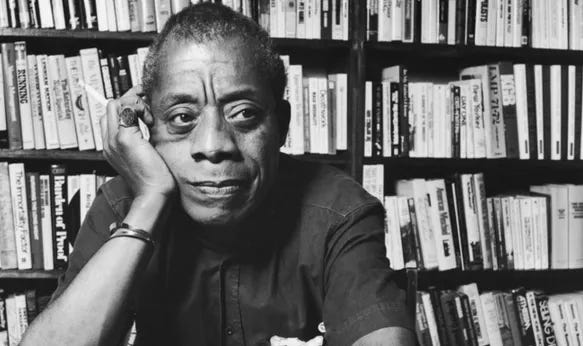
“Truths” from Black Writers is often delegitimized and disregarded if it doesn’t align with the socially accepted colonial curriculum. If what we say isn’t validated or confirmed by eurocentric agencies then our narratives and perspectives are perceived as “incorrect” by the automated algorithms, so our “truth” becomes worthless in the realm of these racially-biased algorithm driven platforms.
Some platforms will literally go as far as attaching a little “this is not a fact” label on your post. I used to experience this when I ran my own blog years ago and would post my articles to Facebook. Just about every time I posted an article that mentioned ANYTHING about Melanin – despite how many authors, scientists, doctors or research papers I quoted – I was immediately discredited by that little label.
This type of scenario happens a lot with Black Writers; especially when writing about Black History, Black Spirituality, or anything that could take Black people out of the inferior perspective that this society is desperate to cling to.
As a consequence, this subconsciously discourages people from supporting Black Writers on social media. We are either made out to be bat shit crazy, completely delusional, or we are silenced on the platforms before our messages can gain momentum.
Conclusion
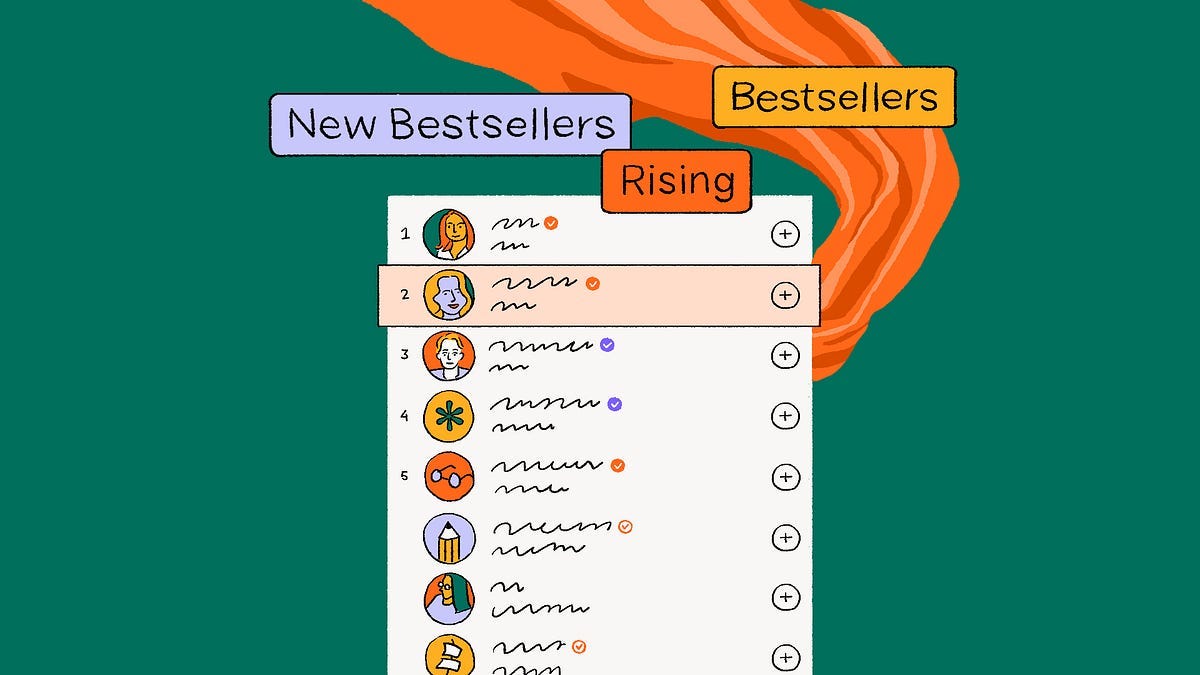
There are many factors that contribute to why there are very few Black people that make the “Bestsellers” list on Substack, but for the sake of space and time I’ve narrowed it down to three.
One; the normalized exploitation of Black Art and the ongoing culture of frequently denying fair compensation, ownership, or recognition for our creations.
Two; the algorithms that govern social media platforms like Substack are trained on racially biased data, which forces Black creatives to finesse through automated walls of discrimination in order to successfully distribute our content online.
Three; Black writers are not deemed “professional” or “credible” unless we adhere to a specific cultural framework; writing that exposes white supremacy, denounces the greed of capitalism, points out the poisonous patterns of the patriarchy, or inspires revolutionary thoughts and energy that are counterproductive to the campaigns of the empire is disregarded and/or suppressed.
The combination of these factors, amongst others, not only leads to a lack of online visibility for Black Writers but it also creates a psychological hesitation to support Black Writers. Which in the case of Substack means a lower likelihood of getting readers in general, and converting those readers into “paid subscribers”. This inevitably leads to a situation like we have today where very few Black Writers make it to the “Bestsellers” list of any category.
Even so, I have been growing in spite of these obstacles. I will continue to grow with the vigorous vigilance and tenacious defiance of the Black Revolutionary Writers that have come before me, and I will rise.
SUPPORTING BLACK WRITERS/VOICES IS REVOLUTIONARY
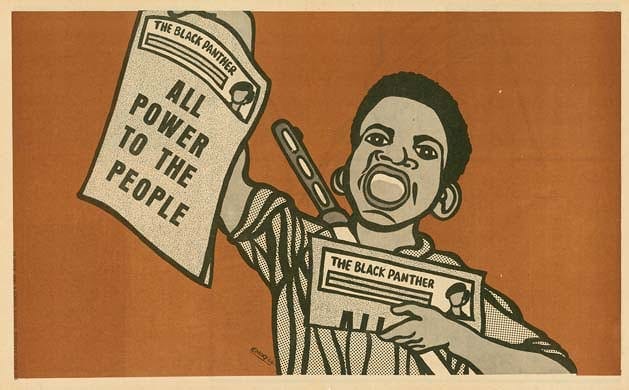
Empowering Black Writers/Voices through “paid subscriptions” is actually a revolutionary act.
The voices that maintain this confusing conundrum of colonial oppression are supported by millions of people, that’s why their voices are so loud and how they dominate the social narratives.
So if you claim to want to end racism and the colossal infrastructure that supports it, then financially empowering Black Writers/Voices who counter the racist rhetoric and oppressive propaganda with revolutionary truths and liberating perspectives is critical to establishing a more egalitarian future.
The people who make the world worse are financially empowered by people who want to keep it that way, and those resources they harness are used to continue these systems of oppression.
If Black Writers/Voices had more resources to continue producing revolutionary works that expose the corruption and elevate Black narratives then the people who intend on continuing these systems of oppression wouldn’t be so able to kill us or wrongfully imprison us then dominate the narrative that always suggests we deserved it.
The people who are trying to make the world a better place that embodies true justice and equality need MORE resources and support than the people who are actively striving to make things worse.
So yes, empowering Black Writers/Voices with “paid subscriptions” is a revolutionary act in the fight against racism and the genocidal system of white supremacy.
Note from the Author:
My name is Jason Williams, author of “The Hue-Man Paradox” and “Dying To Live”, and all of the essays or articles that are available on my publication are written 100% with my human hands typing words onto a keyboard that were generated by my human mind.
If you find value in what I produce, consider becoming a free or paid subscriber to receive new posts and support my writing.
Your paid subscriptions, regardless of the tier, make a significant impact on my life and help me realize my aspirations of one day being a full-time writer sustained by the reciprocated value of my creative works.
Thank you for reading, one love.
What an insightful well thought out and strategic and professionally written article and I thank you for writing it.
Very well thought out, researched and articulated. Thanks for posting this!